
Bargaining with the Future

A powerful personal AI system is a bargain: the more of yourself you give up, the better it works for you. That is not a problem that interface or design systems alone can solve. Without philosophy as a core consideration in designing future agentic systems, the bargaining will be done for you.
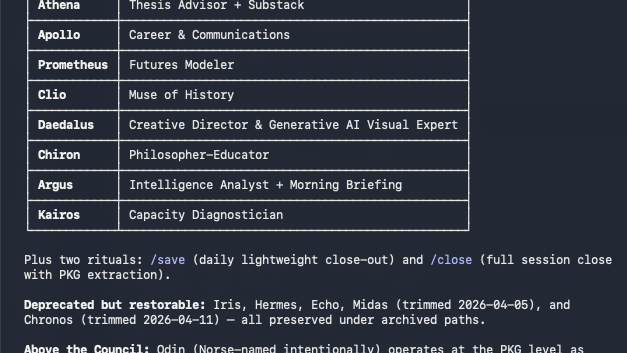
The app paradigm that has governed personal computing since 2007 is no longer sufficient for how we live with information. The response is LifeOS, a speculative personal operating system for 2030 designed across AR glasses, a foldable tablet and a unified product ecosystem that consolidates fragmented digital life into a single context-aware, intent-driven paradigm. Through sustained engagement with an agentic prototype of such a personal OS over the span of months, I came to discover that the most consequential design decisions of such future systems reside not only in the visual layer, but are fundamentally behavioral.
I argue that the design of powerful AI systems requires philosophy as a core consideration. As systems like these grow in capability and proliferation, the philosophy through which they augment users will have far-reaching consequential effects. The response, Designed Restraint, is a model philosophy that proposes a powerful personal AI system that knows when to hold back to preserve human judgment, agency, and growth.
The question isn't whether to make the bargain. It's who wrote the terms before you arrived, and whether you have a seat at the table after.