
MiMo
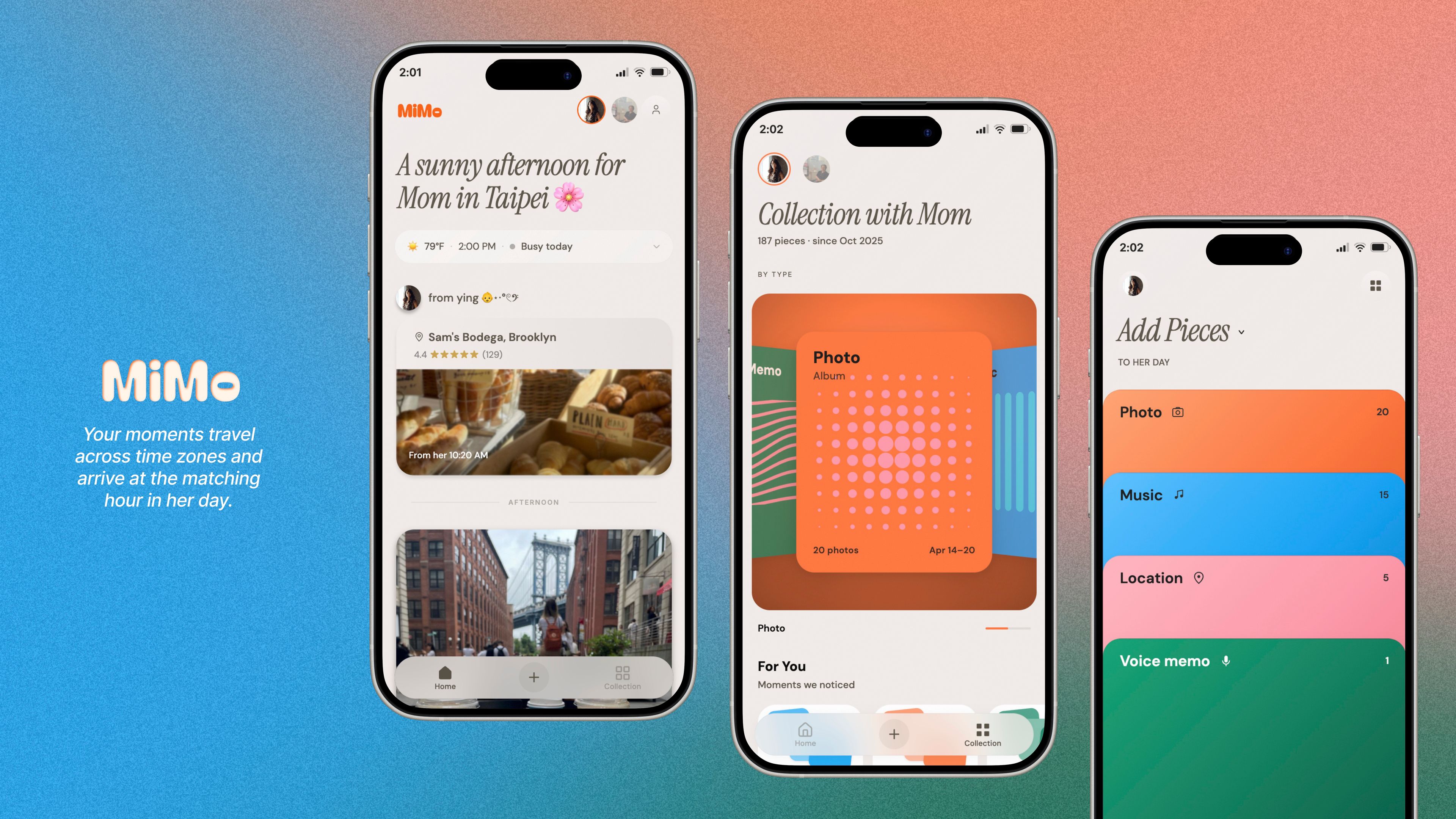
MiMo helps families across time zones share pieces of their day. Pulling data points from apps they already use, Mimo delivers messages at at mirrored moments, rather than instantly. Between exchanges, visual cues show the shape of each other's day so both sides can know when the other is available.
"I only share good news with my mom. Small things — a broken washing machine, a blister — I don't want her to worry." — Participant, 27, lives in New York; mother in Taiwan
Across time zones, even the simplest awareness falls apart. Your 3PM is her 3AM. The message arrives. The impulse to send it didn't. We've built technology that responds to distance with speed — but when two people's time is incompatible, immediacy just becomes misalignment. The problem is not always how to talk more. Some forms of knowing each other were never about talking.
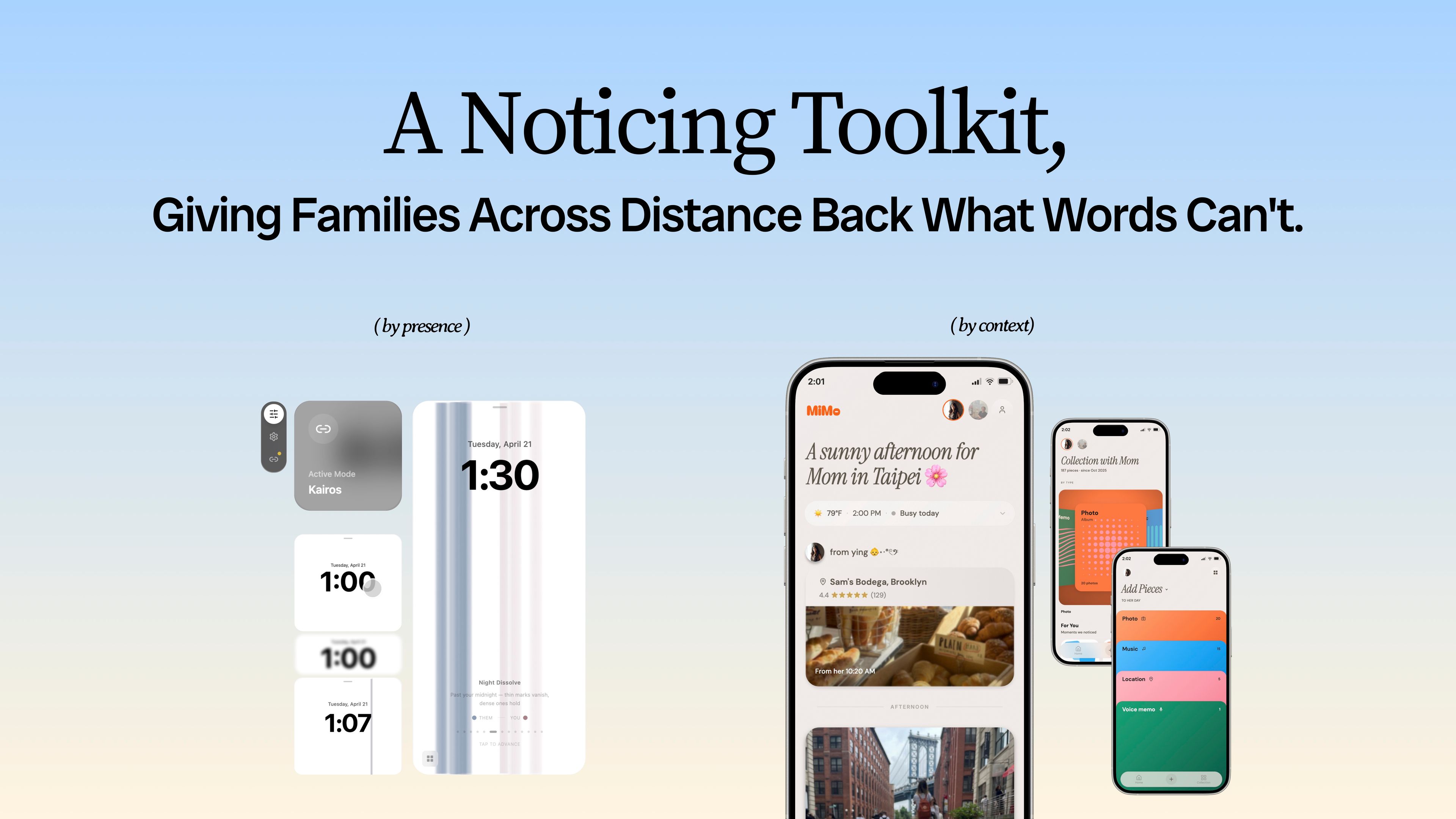
So I designed Across Time: two paired objects for long-distance parent-child relationships. Not better communication — but perception in the absence of it.
The two sit on a spectrum from passive to active. Timeprint turns the simple act of checking your phone into a shared 24-hour timeline. Mornings become a way to see your mother's completed day. Evenings show her day just beginning. Sometimes her traces appear live, and you know you can call. MiMo works differently — it surfaces moments you wouldn't have thought worth sharing and delivers them at the matching hour in the other person's day. Your 2PM arrives at her 2PM, traveling thirteen hours to land in her afternoon.
Not designed for talking. Designed for noticing.