
Who's At Your Table?
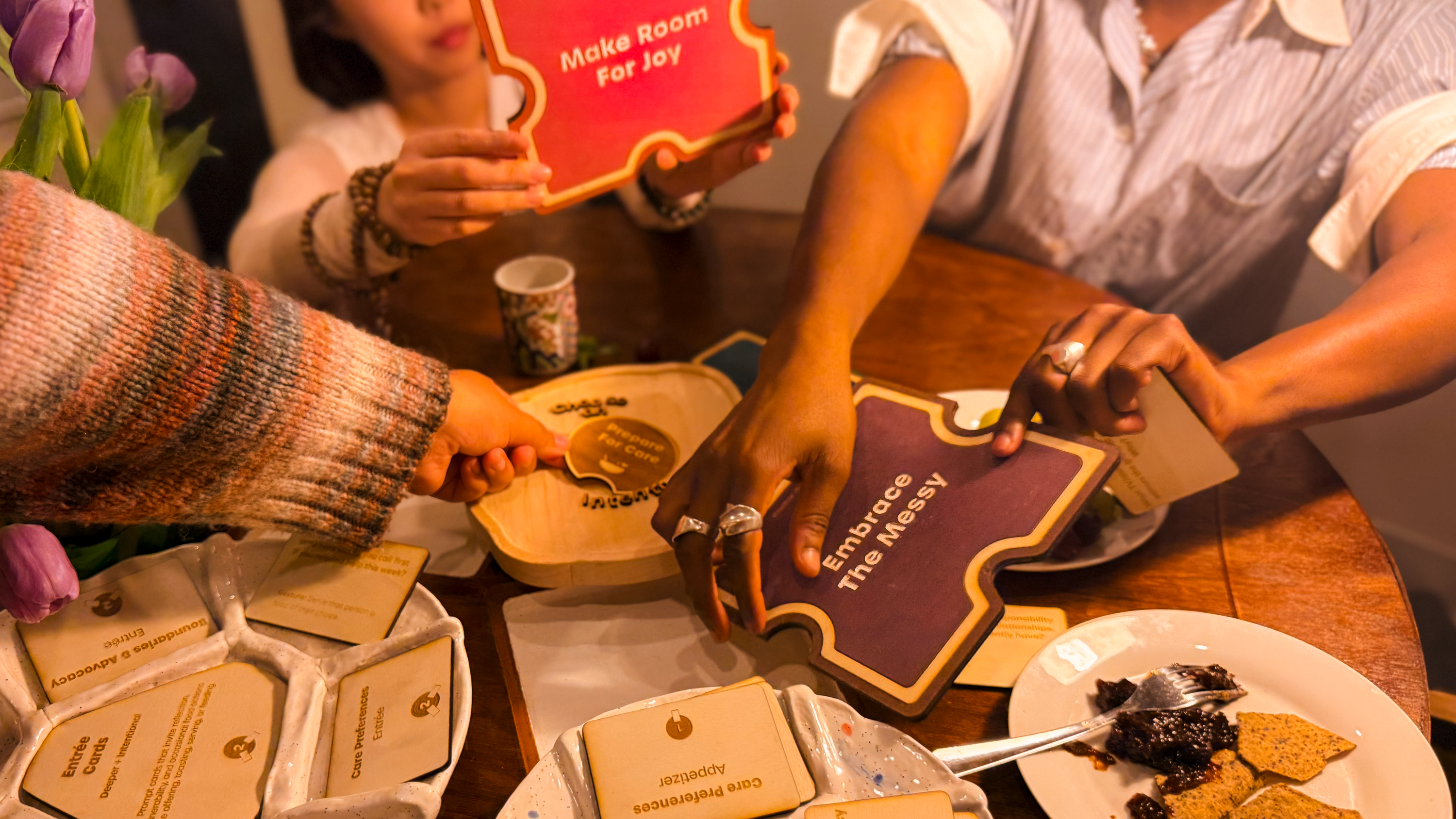
Who’s At Your Table is a dinner-based gathering experience for queer chosen families to have more intentional conversations about health, aging, care, and advocacy. Rooted in the understanding that many queer people build family outside traditional structures, it uses guided practices to support stronger relationships over time.
For many queer folk, the spaces that are meant to offer comfort, safety, and community are often where we first experience isolation and rejection: the family member who refuses to accept your identity, or the group of childhood friends who struggle to accept you. In a study by the Trevor Project 2023, fewer than a third of queer youth in the U.S. found their home to be supportive.
Queer people have always found ways to build a community of care outside of traditional family structures. When the opportunity for family wasn’t a given, they created it: a phenomenon known as a “chosen family.”
I explore how queer people cultivate chosen families after experiencing ruptures within traditional systems. While these relationships are often rooted in deep care, many people still need support to practice healthy communication styles that are important for sustaining long-term relationships. For example, how do you ask your chosen family to show up for you if you were never modeled this in your traditional one?
Who’s At Your Table proposes a dinner-based gathering experience that supports queer, chosen families in practicing more intentional conversations about care, support, and how they want to show up for one another. Gathered around a shared meal, participants begin by setting the table through a small set of chosen practices, moving from “appetizer” prompts into deeper “entrée” conversations about health, aging, care, and advocacy. They close by creating a few shared, take-away reflections or agreements that remain visible at the center of the table. Inspired by dialogic and facilitation practices, the project uses a queer design lens to challenge normative ways of gathering and conversing, offering a structure for building deeper, more intentional relationships over time.