
Unseen Stories
How can people experience the hidden stories embedded in public spaces? Through simple, tangible experiences, like telephone, viewfinder, and coasters Unseen Stories invites people to slow down, notice, and feel more connected to the world around them.
You arrive. You take a photo. And then… you leave. Strawberry Fields holds decades of collective memory — yet most visitors experience it only briefly. Not because they don't care, but because the space has no way to invite you in. What if interaction design could change that?
Unseen Stories explores how to reveal the hidden stories embedded in public spaces. Through simple, tangible experiences, it invites people to slow down, notice, and feel more connected to the world around them.
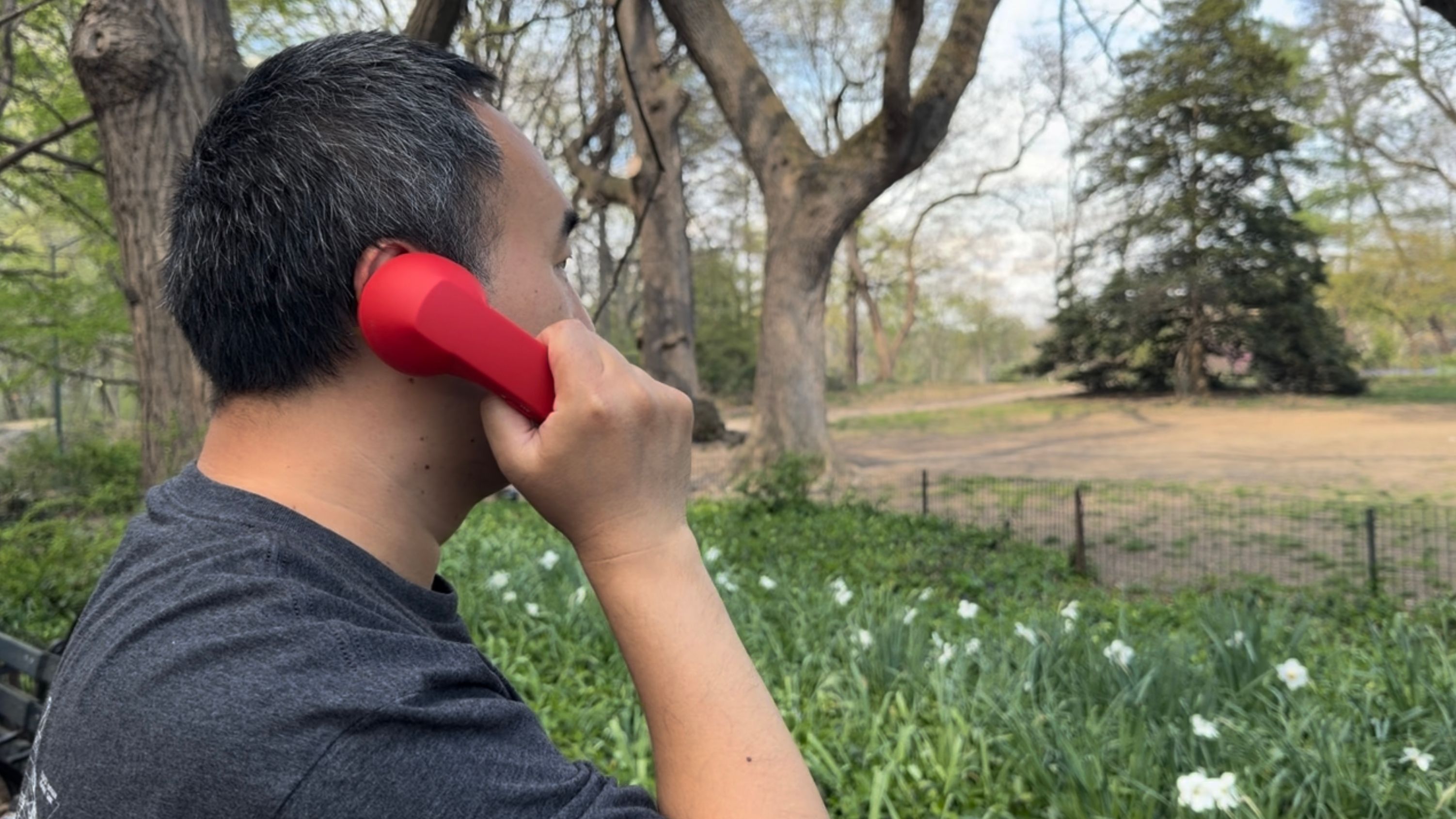
1) The Call: You notice a red telephone on a bench. You pick it up and a voice greets you. You can dial a number to hear a specific story or simply speak. The system responds with stories of this place: the name behind the garden, the man who loved this city, the woman he met, the night strangers gathered with candles outside the Dakota. The stories have always been here, waiting to be heard.
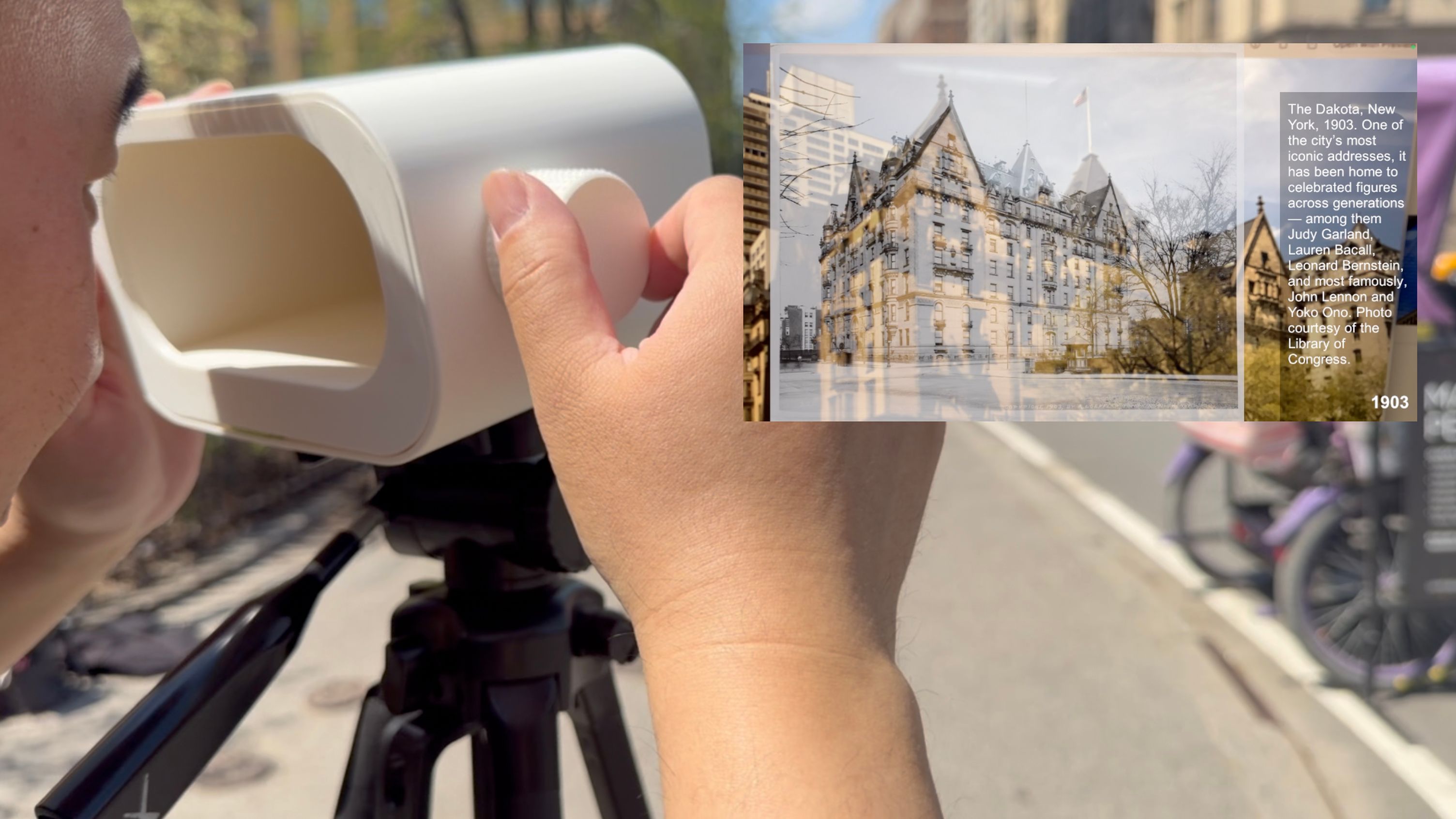
2) The Witness: You look through a viewing device. A small dial sits under your fingers. Turn it, the past comes into focus. Turn it back, and the present returns. Photographs taken at this exact location, across more than a century. The same place, different moments in time.
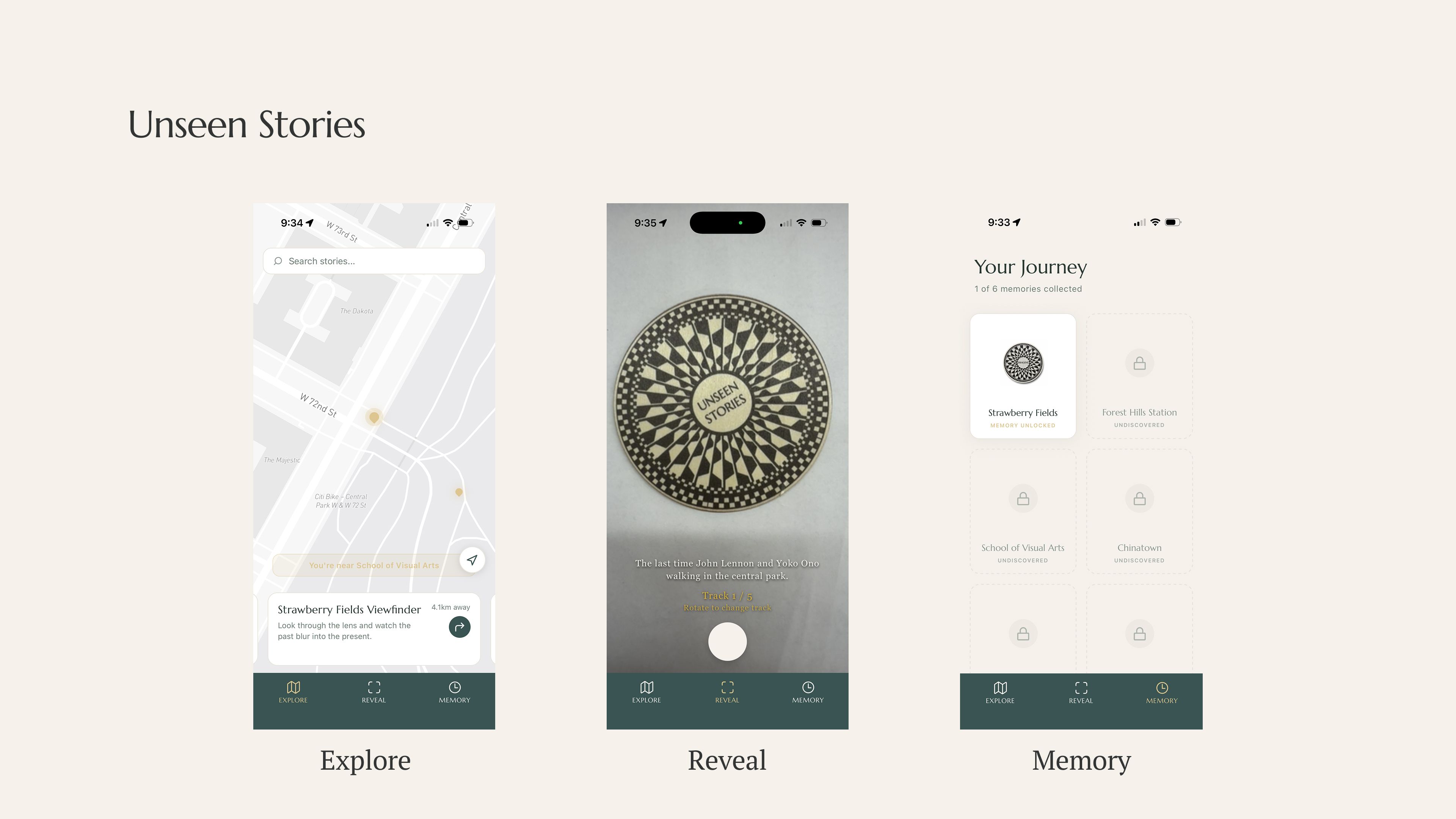
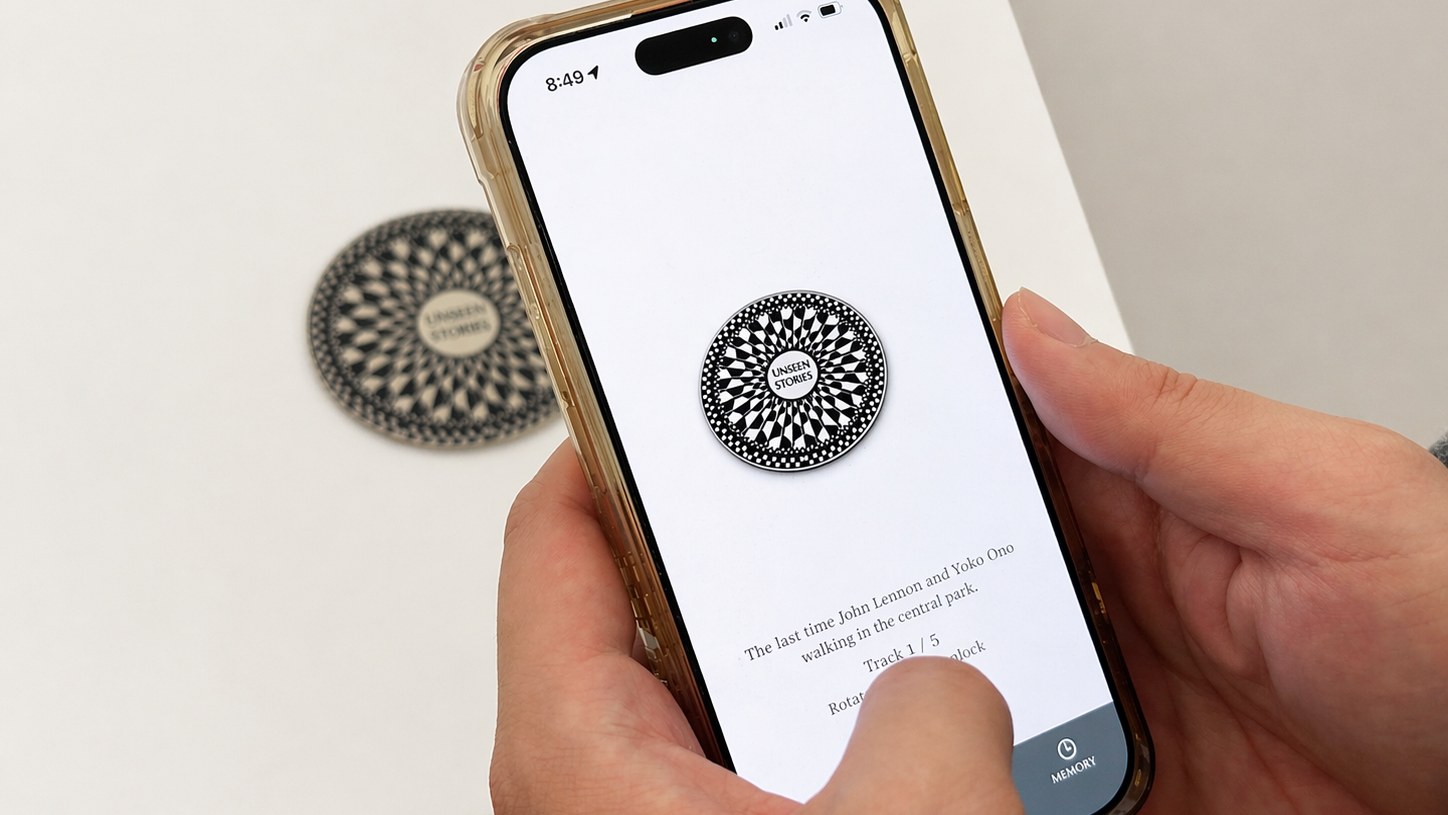
3) The Keepsake: At The Call and The Witness, you can collect a coaster— a memento of this place. On the back, a map guides you to the next unseen story nearby. Take it home and scan it — the stories come back to life. Rotate the coaster to navigate between moments. The experience continues beyond the site.
Strawberry Fields is just the beginning. Scattered across cities, a street corner, an abandoned building, a quiet bench. I see an opportunity for a framework: Unseen Stories as a new way to experience cities.