
When Space Becomes Interface
Before taking this course, we understood spatial computing primarily as AR, VR, sensors, and digital interfaces layered onto physical spaces—interesting, impressive, and often described as “cool tech.” Both parts of this course disrupted that framing early on. Within the first few weeks, we began to pay less attention to technology and more attention to people: how they moved through space, where they paused, what they ignored, and what they gravitated toward without realizing it. Over the semester, the classroom became a place where curiosity took the lead, and certainty was constantly questioned. This is less an account of what the course covered and more a reflection on why it mattered to us.
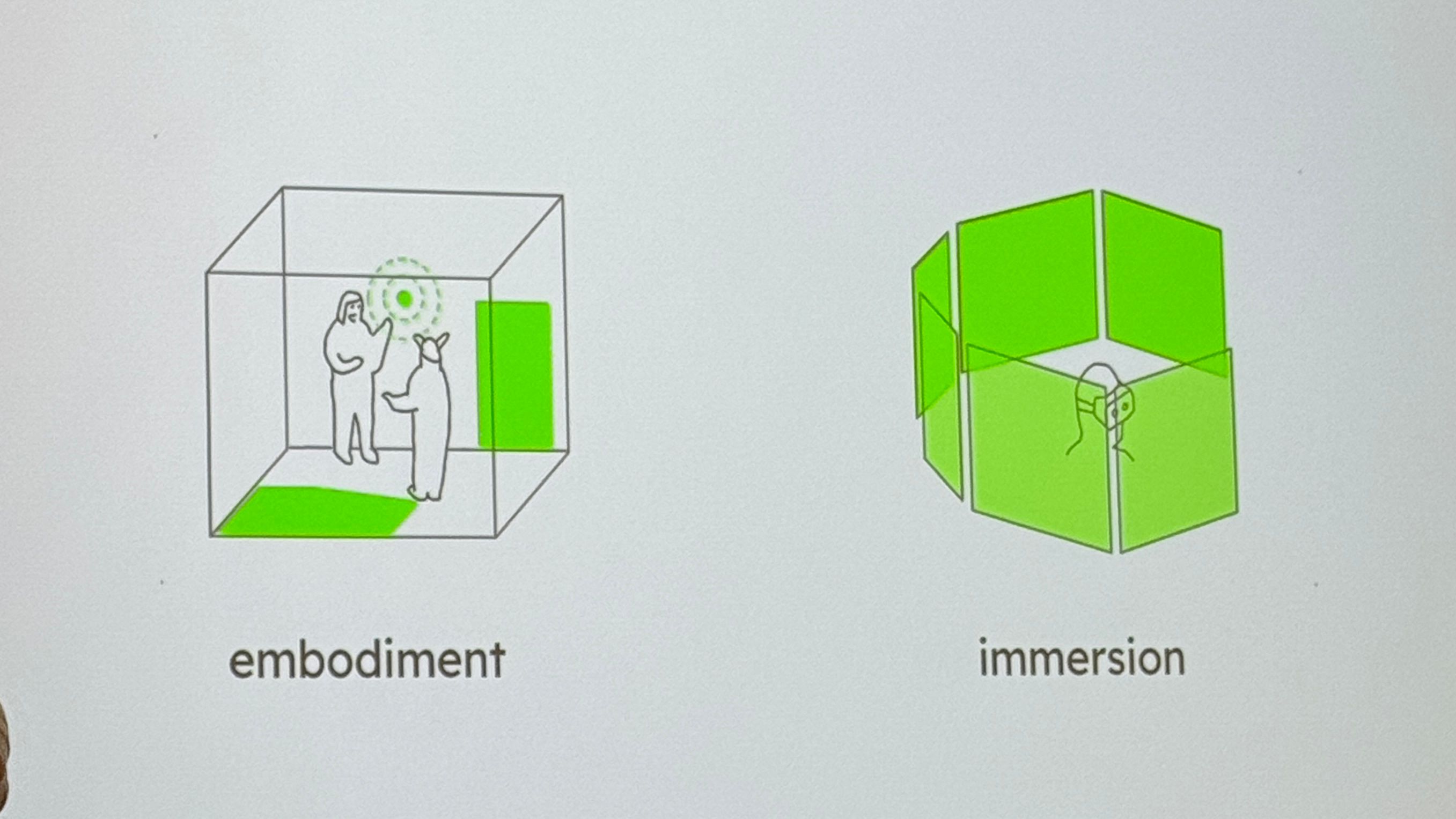
One of the earliest moments that shifted our thinking came when we were asked to analyze existing spatial technologies and their impact on behavior. Not how impressive they were, but how they quietly shaped interaction. We realized how much spatial computing already surrounds us, operating without spectacle. Pokémon Go emerged early, not only as a novelty, but as an example of how geolocation could gently push people outdoors, into parks and streets, changing how cities were experienced. We found ourselves strangely fascinated by how the Disney World app choreographs movement at scale: queue times, reservations, subtle nudges toward less crowded spaces. A massive spatial system hiding in plain sight. These examples made something click for us. Spatial systems are not passive; they do not simply respond to environments. Rather, they actively rewrite them.
One student articulated this shift perfectly:
“Spatial computing shifted for me from “screen-in-space” to “interface-as-space” — a move toward more natural, multimodal, and future-oriented interactions. It’s not just technical augmentation of space, but cultural and experiential augmentation — shaping how people feel, behave, and imagine in a place. - Yinyin Zhou
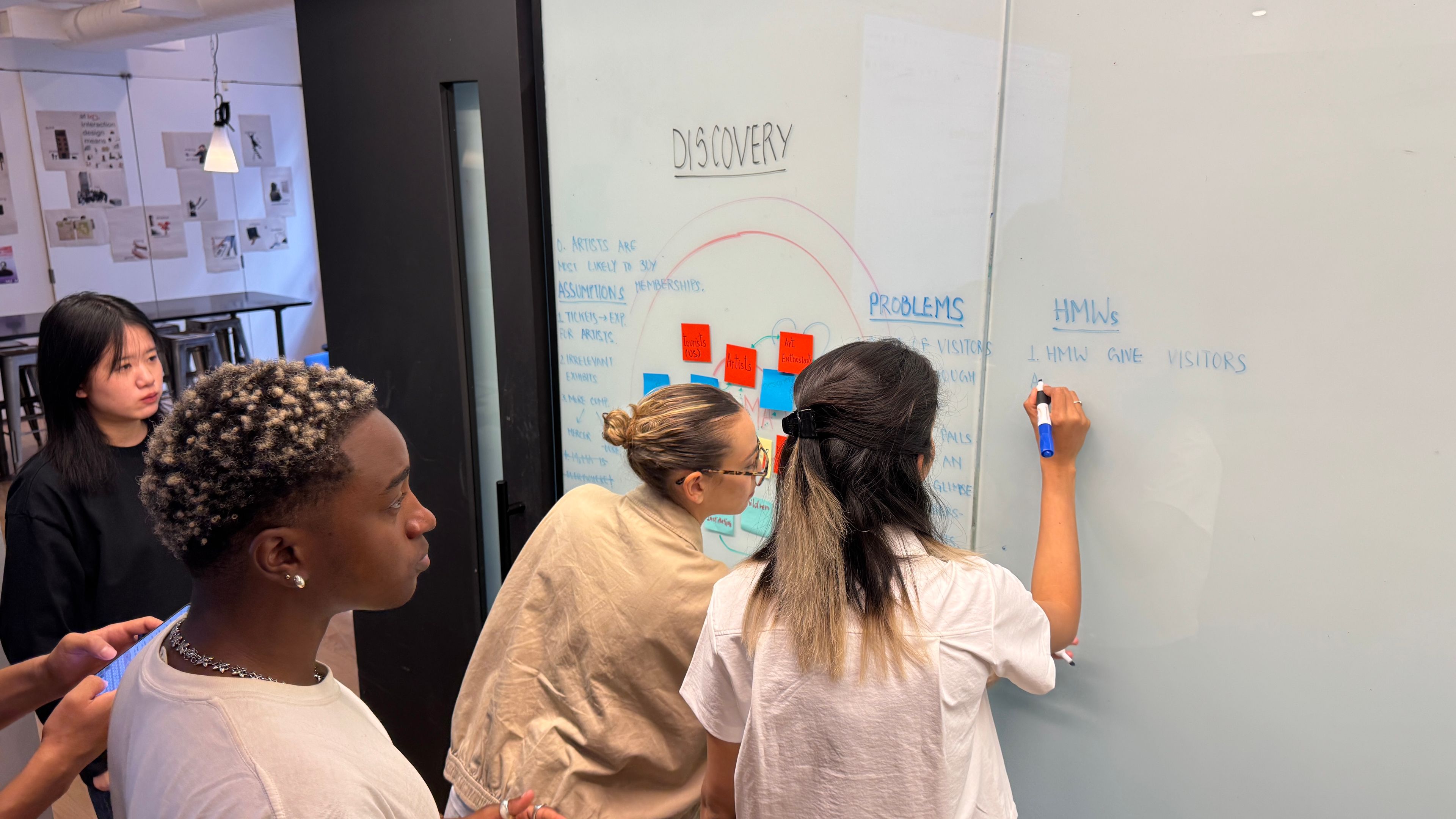
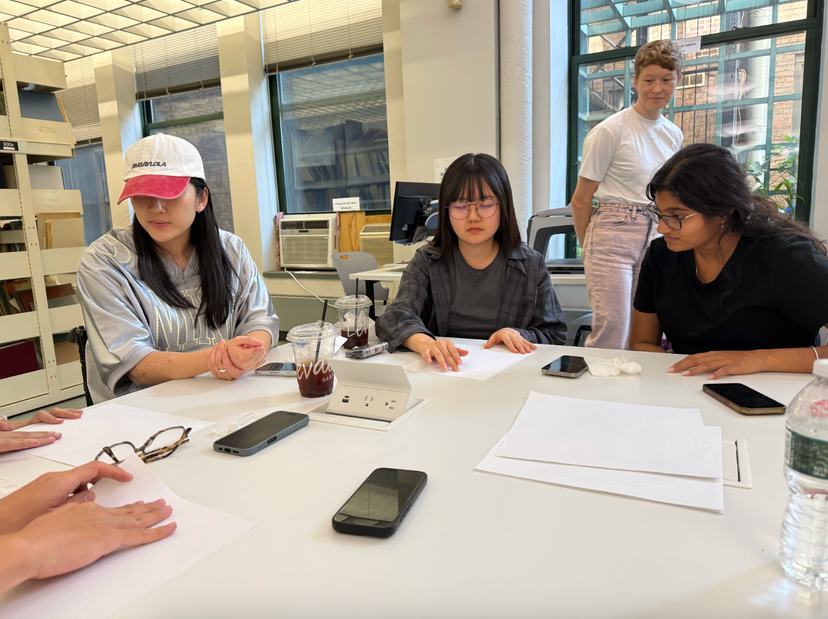
What we loved most was that the course emphasized rapid experimentation and hands-on exploration. We formed fictional (world class) studios and pitched speculative projects to NYCEDC(played by our faculty and first years). The exercise felt playful at first. Then it became revealing. Suddenly, ideas had weight. We had to think about rollout plans, scale, and what it actually means to introduce technology into a shared space. From this point on, the conversation shifted. Innovation was no longer enough. Feasibility and accountability had entered the room and refused to leave.
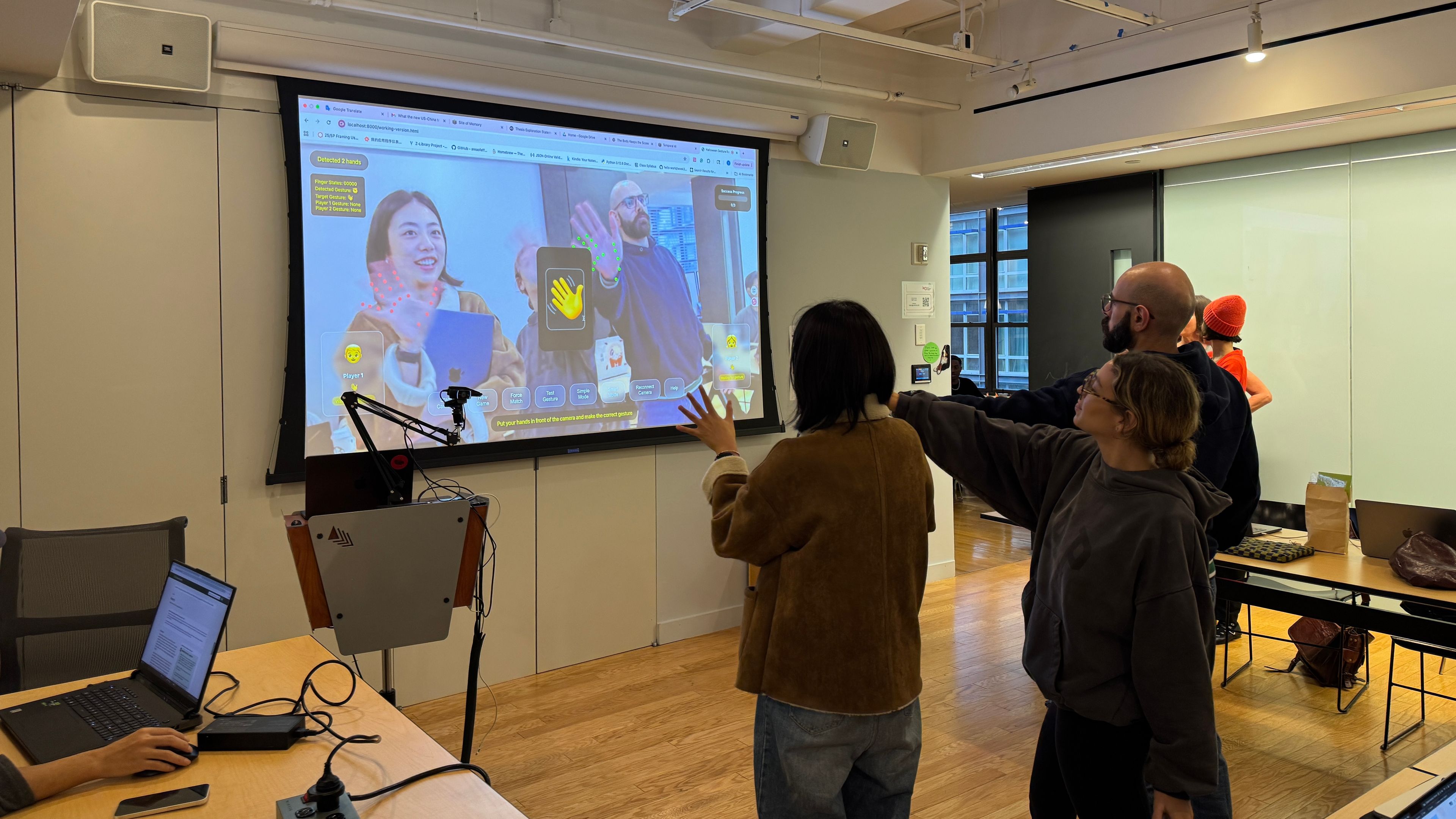
The second half of the course felt like permission to play again, but with sharper instincts. We worked with gestures, sound, light, movement, and speech to prototype spatial interactions at different scales. Using Procession and the Spatial Computing Lab in the SVA ixD studio, we explored how even the smallest change in an environment could alter how an experience unfolded. The weekly check-ins were a highlight. By prioritizing intent over polish and curiosity over certainty, Violet and William created a sandbox where ambition was encouraged and failure felt useful. As a result, the class grew more confident with unfamiliar tools, learning to trust the process and sharing a common language rooted in exploration rather than performance.
As our final projects came to life, the studio started to feel less like a classroom and more like a series of moments waiting to be discovered. One project reimagined karaoke, turning it into a fully immersive experience where space, sound, and movement worked together to heighten performance. Another, titled Dial a Book, invites you to pick up a phone and quite literally talk to your bookshelf, transforming book search into an embodied spatial conversation. Some projects explored how story telling for children could be told across a room rather than on a page or screen. Others experimented with haptic feedback, using touch to create subtle loops of response between a person and their environment. This phase made it clear that spatial computing does not require grand installations or futuristic setups. It can emerge from the smallest interaction.
One student reflected, “I learned that even a small space or a simple interaction can be spatial computing. There are so many ways to explore it through gestures, sound, light, or speech.” That sentence stayed with me as a reminder to think more intentionally.
Watching these projects evolve made us reflect on how much of our digital lives ask us to sit still and look forward. These projects asked something different. They asked us to move, to listen, to notice.
One student summed it up simply when they said, “I’m now thinking about how to design with less screen and more physical interaction.”
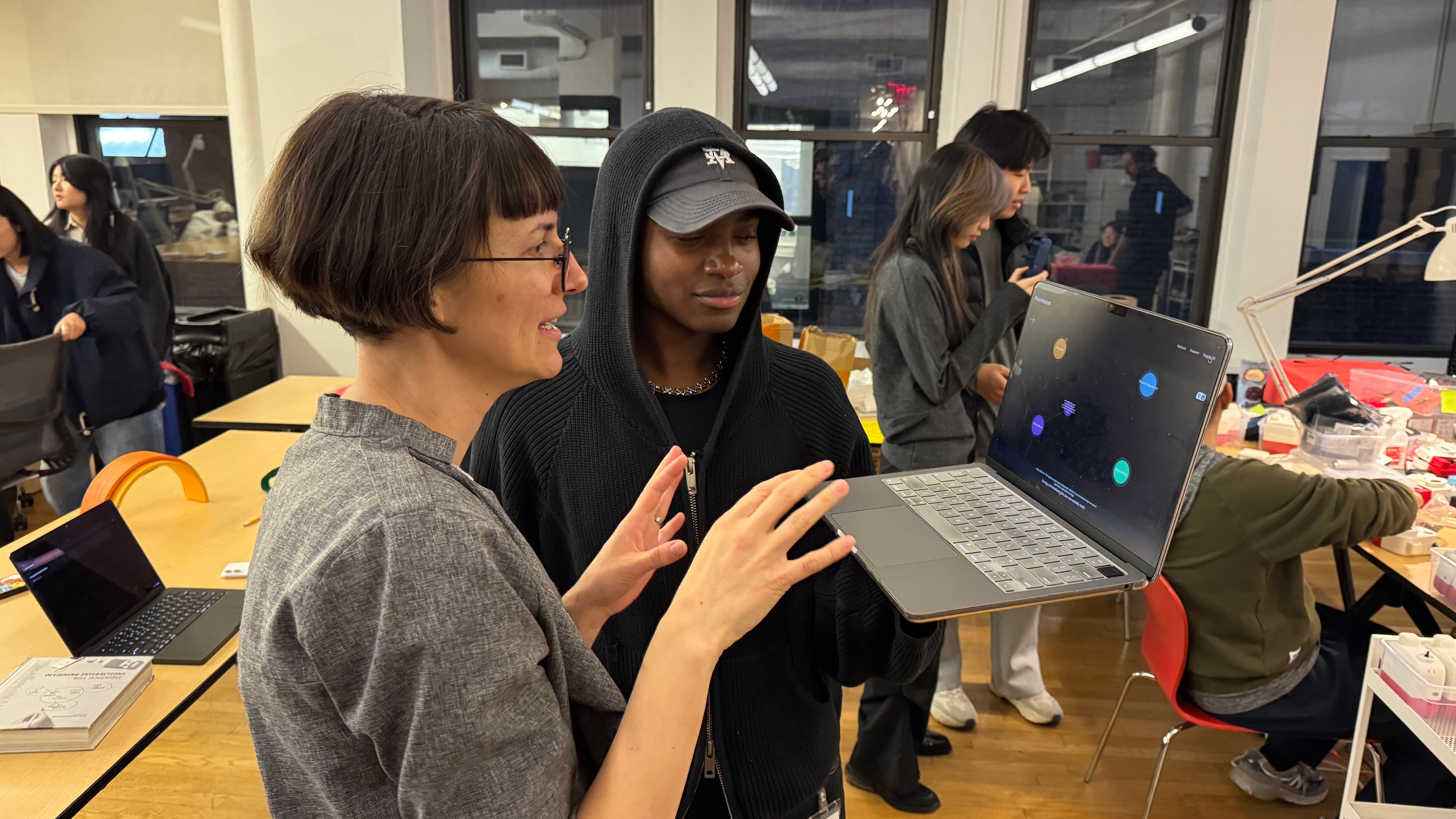
For many of us, the final project felt like a beginning rather than an end. One student shared, “I want to keep developing my final project to further explore how physical and digital layers can meaningfully integrate.” That impulse felt like a quiet success of the course. The work did not end when the semester did. By the end of the term, the shift was not just in skill but in perspective. We grew more comfortable questioning assumptions, evaluating feasibility, and imagining how ideas live beyond the studio. That growth came from making together, critiquing honestly, and reflecting often. The class fostered curiosity and attentiveness as daily practices, skills essential not only to spatial computing but to design as a whole.
Spatial Computing gave us a place to rethink familiar interactions and imagine new ones. A huge thank you to the students who showed up with openness, generosity, and a willingness to sit with uncertainty. To Paul, Violet and William, for building a space that valued curiosity over certainty and care over polish. This class will stay with us, not as a syllabus or a set of projects, but as a way of paying attention.