

How Digital Accessibility Made Me Rethink My Design Practice
This semester in Digital Accessibility, taught by Elyse Voegeli, our students learned that accessibility isn’t a constraint; it’s a creative lens that reshapes how we build digital worlds that include everyone.
Below are five highlights that defined our journey.
1. What If You Couldn’t Rely on Sight to Experience the Web?
Through exercises on screen readers, keyboard navigation, and contrast testing, students quickly realized that accessible design begins where visual design stops. Accessibility became not an afterthought, but a design philosophy.
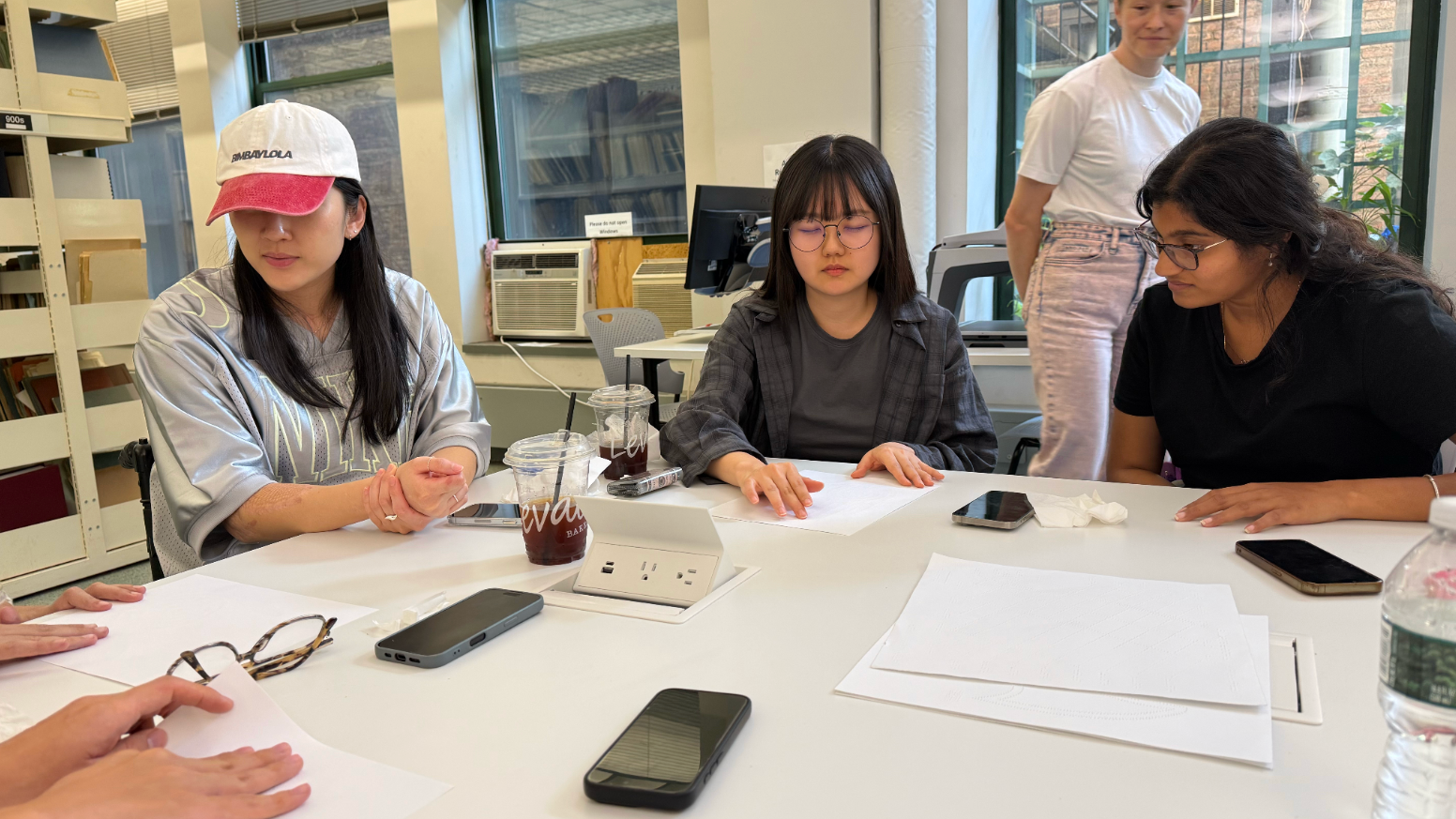
2. Experiencing the World Through Touch: A Field Trip to the Andrew Heiskell Braille and Talking Book Library
One of the most powerful moments came when we visited the Andrew Heiskell Braille and Talking Book Library. Led by Chancey Fleet, an accessibility advocate and library educator, students experienced “unvisual” ways of understanding information—through Braille alphabets, tactile diagrams, and 2D tactile maps.
This experience grounded abstract accessibility principles in lived, sensory experience—reminding us that digital design is never just digital.
3. Accessibility isn’t theory—it’s practice.
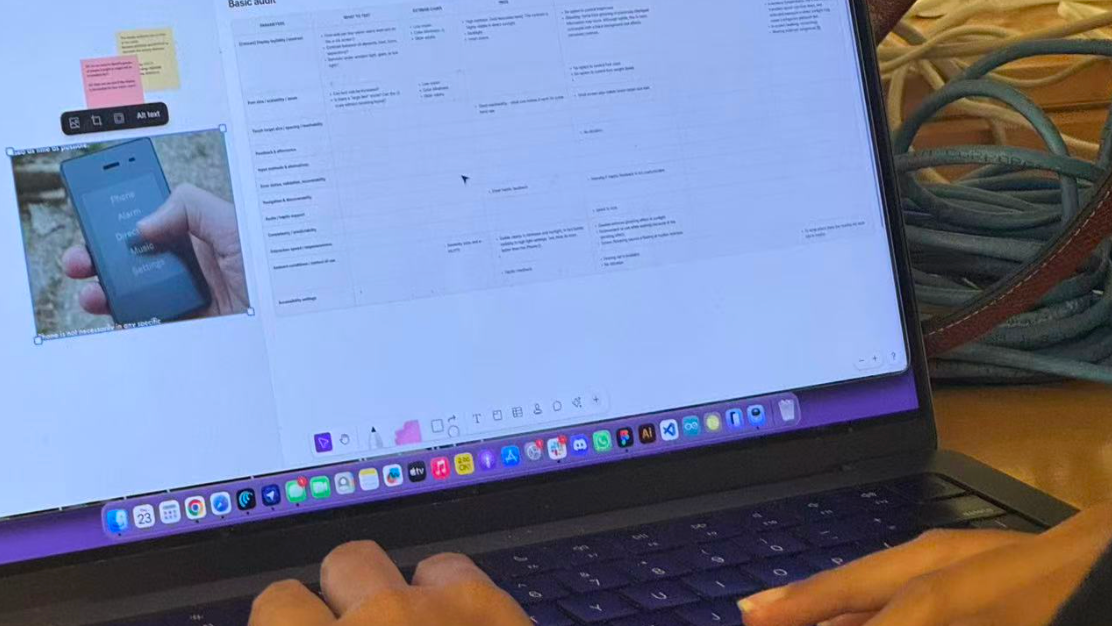
Throughout the course, students collaborated in Miro to redesign familiar interfaces with accessibility in mind. Using tools like WAVE, Figma plugins for accessibility checks, and screen reader simulations, they built prototypes that emphasized inclusive interaction.
Each team chose a project—some redesigned MoMA's website for low-vision users; others chose a different medium, Light Phones, and designed based on its interaction mode. What emerged were not just “accessible versions” but new interpretations of usability that benefited everyone.
4. From Compliance to Compassion
One key takeaway was learning that accessibility isn’t only about WCAG compliance or ARIA labels—it’s about empathy, storytelling, and equity. When we say ‘design for all,’ we’re not designing for a checklist—we’re designing for human dignity.
In class discussions, students connected accessibility to broader topics like design justice, inclusive storytelling. This helped frame accessibility as a moral and cultural responsibility, not just a technical one.
5. Looking Ahead: Accessibility as a Creative Frontier
The semester closed with the collective realization that accessibility isn’t the end goal, it’s the starting point of innovation. From designing voice interfaces to exploring alternative navigation systems, students imagined how accessible design can expand the possibilities of digital interaction for everyone.
Our final takeaway? Accessibility is not a ‘special feature’—it’s good design, done right.
Final Thoughts
As a Course Assistant, I witnessed how this class transformed the way students think about users, tools, and digital spaces. The conversations that we had throughout the course reminded us that accessibility lives at the intersection of empathy and imagination.
Credits: Course: Digital Accessibility, SVA MFA Interaction Design
Instructor: Elyse Voegeli
Course Assistant: Ziheng Xu
Special thanks to: Chancey Fleet at the Andrew Heiskell Braille and Talking Book Library
When Space Becomes Interface
 Student Bloggers / Spatial Computing